The thin line
Year: 2025
Supervision: Prof. Dr. Frank Eckardt, Malena Rottwinkel
Focus: democracy design | workshop | transformation | community | collaboration | intercultural communication
Designers: Leopold Slenczka (coordination and graphic design)
This project was developed as part of the DAAD exchange program ‘Inclusive Cities’.
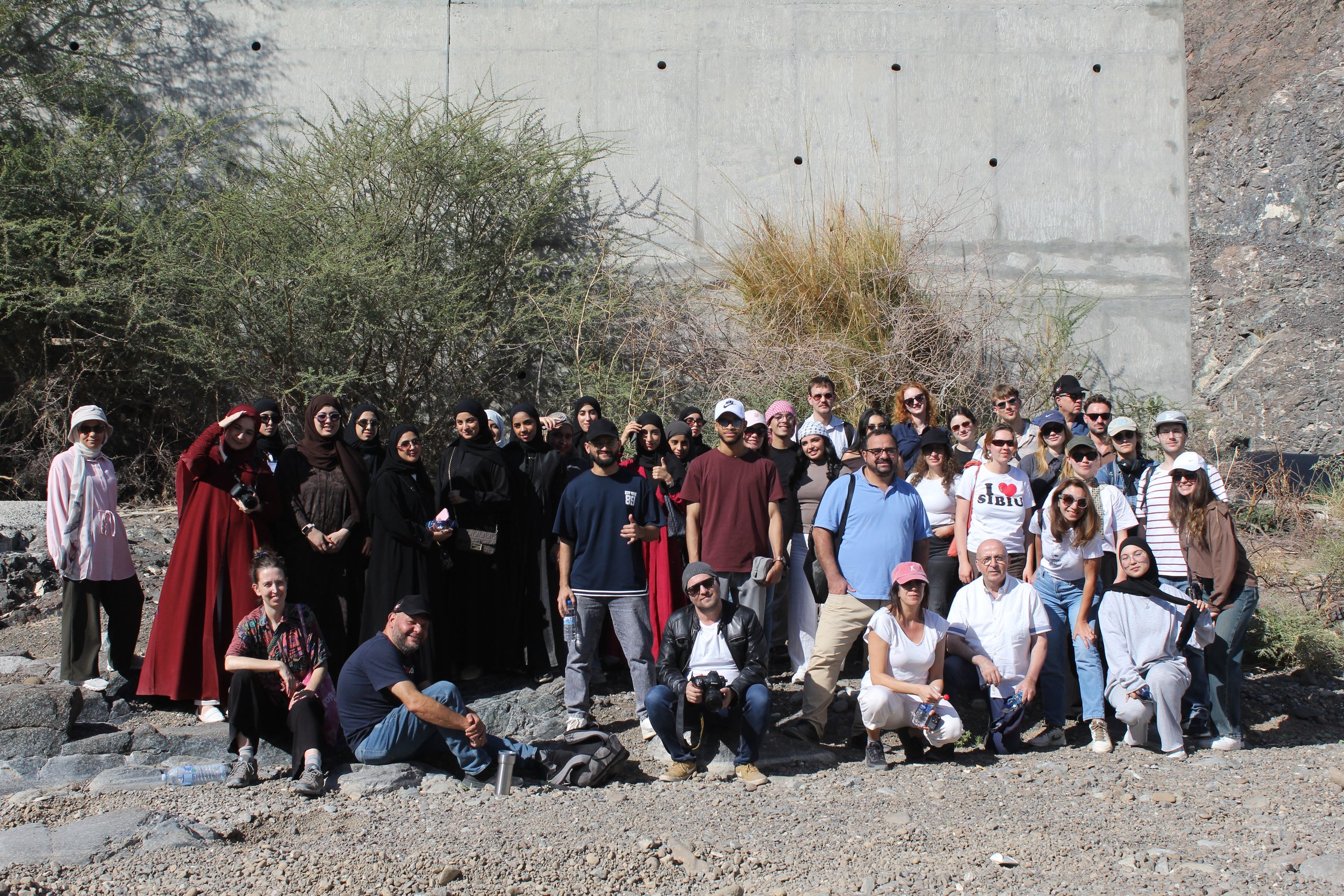
At the end of 2025, I was part of a group of students from the Bauhaus University Weimar who were given the opportunity to travel to Oman to meet with students from Oman (SCD-Scientific College of Design Muscat) and Lebanon (NDU-Notre Dame University Louaize) to learn about the preservation of tangible and intangible world cultural heritage.
The primary focus was on intercultural communication.
In a workshop, participatory concepts were developed with the aim of revitalizing the abandoned city of Al Hamra and making it attractive for future use.
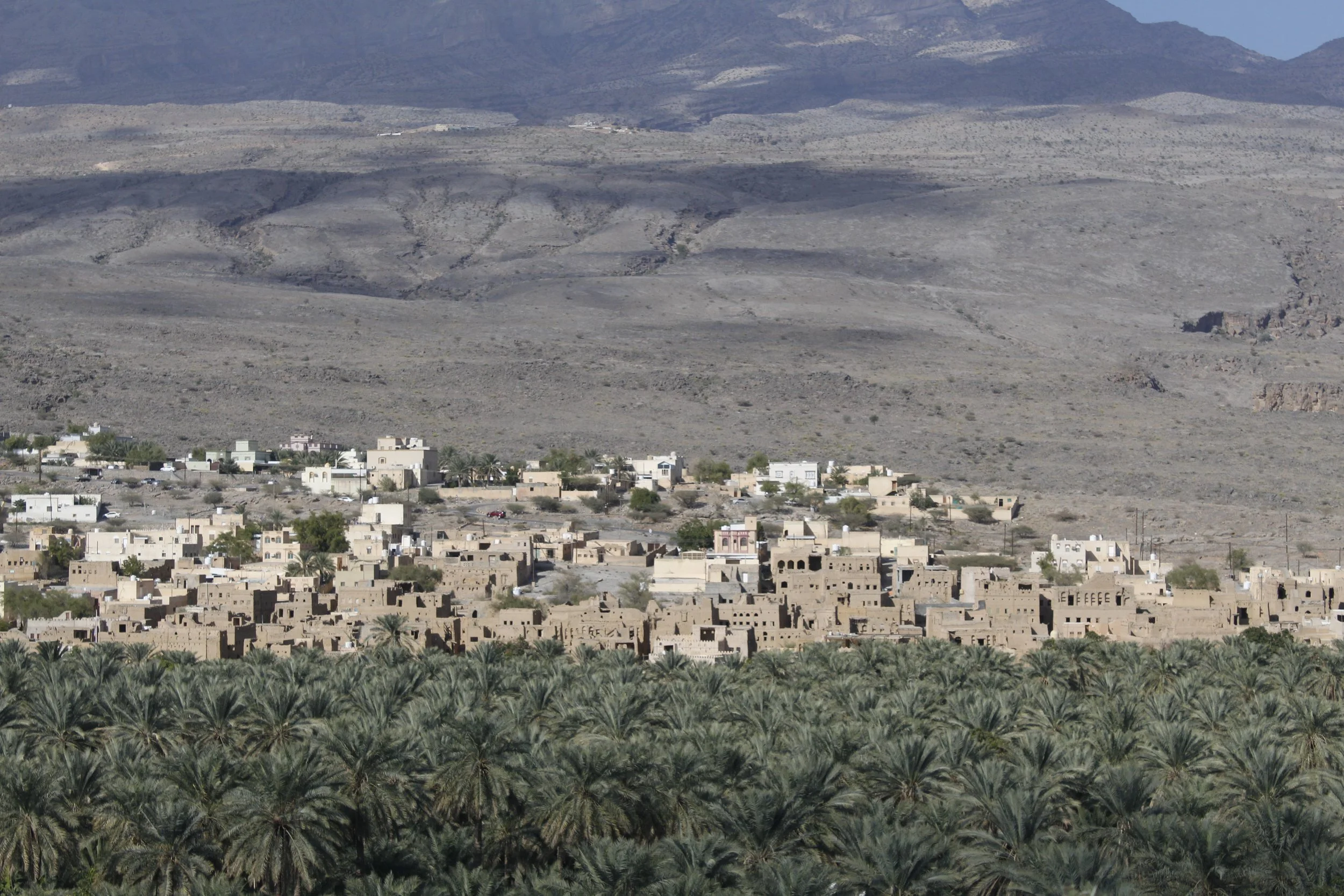
The Situation
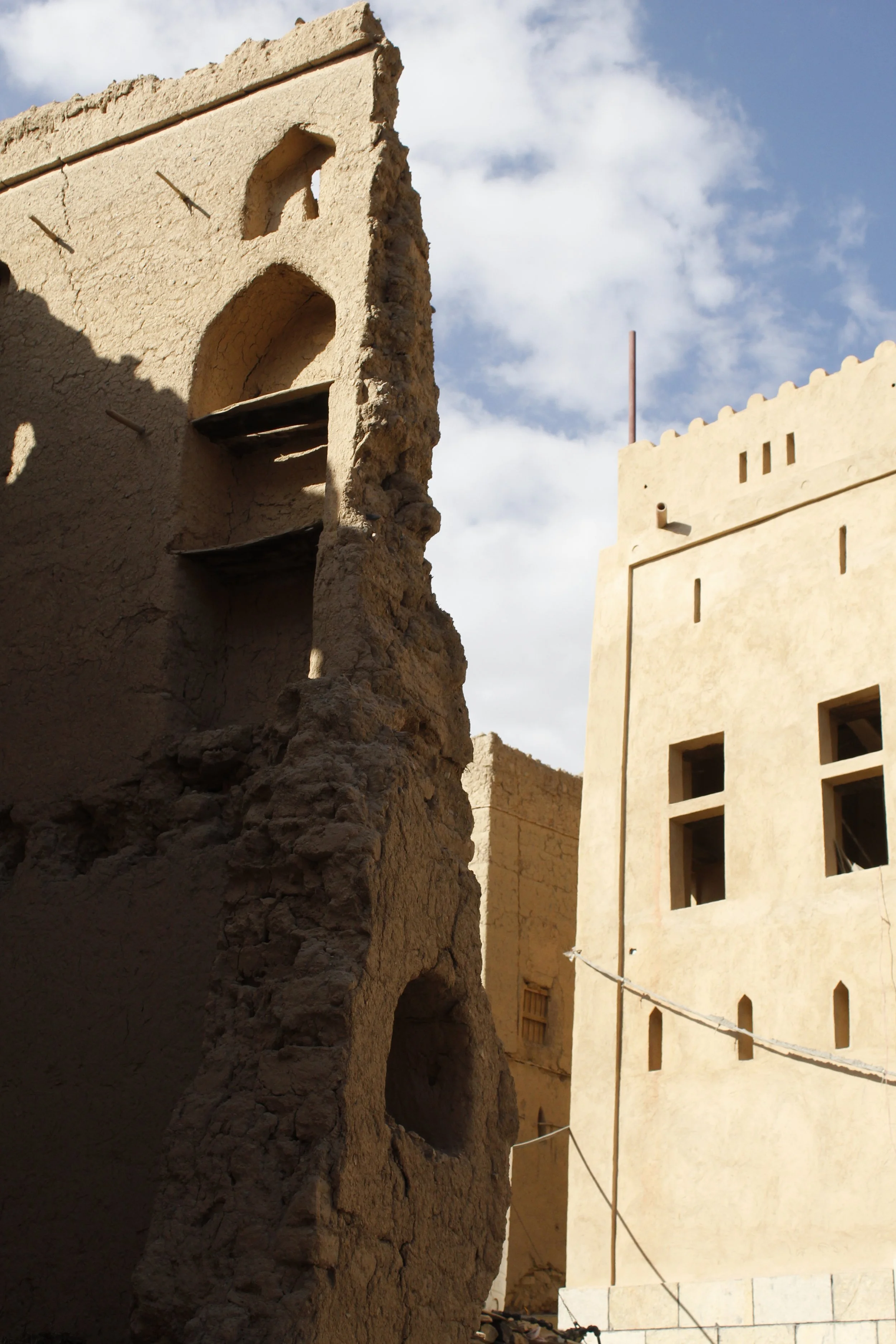
Building with mud and dirt has a long and vibrant tradition in the Middle East, particularly in Oman.
But as a result of structural reforms imposed by the Sultanate of Oman, many cities traditionally built with earthen materials were gradually abandoned, as inhabitants moved into newly constructed houses offering improved infrastructure and modern creature comforts.
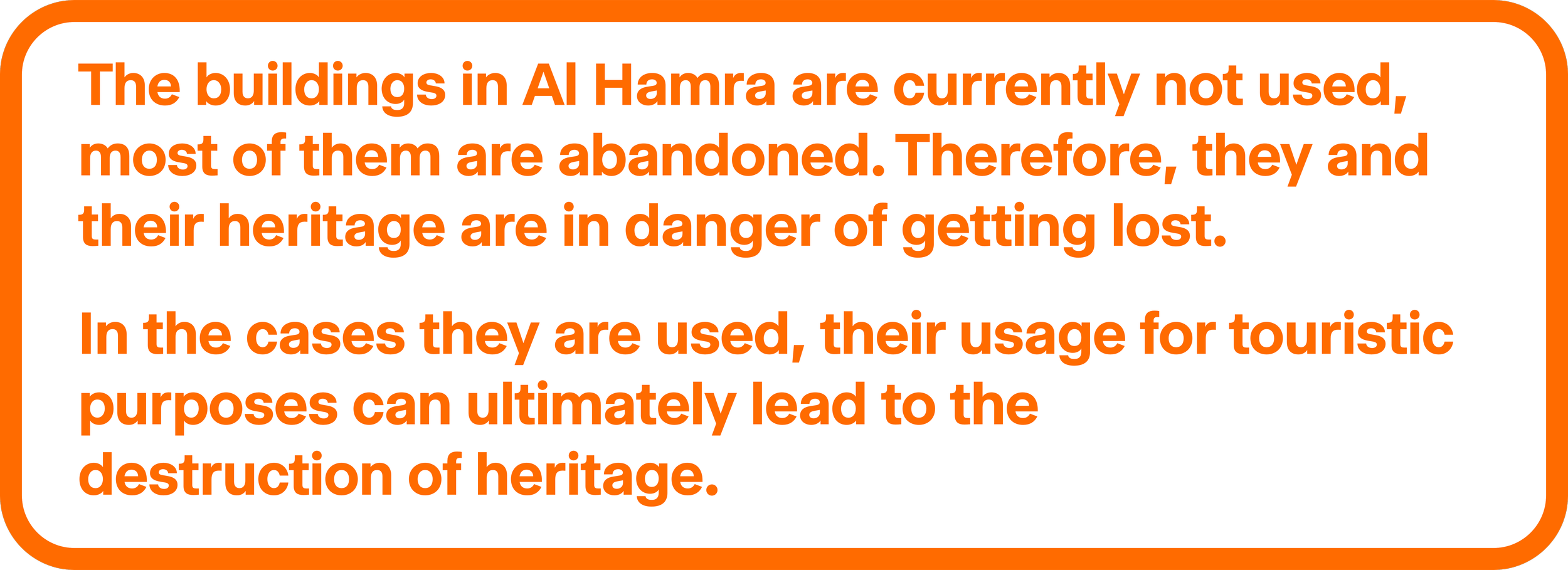
The city of Al Hamra, located in the northern part of the Sultanate of Oman, was selected as a case study for this DAAD project. Today, the buildings in Al Hamra are largely unused and in many cases abandoned. Where buildings are still in use, their adaptation for tourism can contribute to the degradation and loss of cultural heritage.
Both the tangible and intangible heritage embodied in these settlements are of significant interest to UNESCO, including within the Omani context. Therefore, the revitalization of sites such as Al Hamra is of great importance in order to preserve collective memory and sustain the knowledge of traditional building techniques.
The Workshop
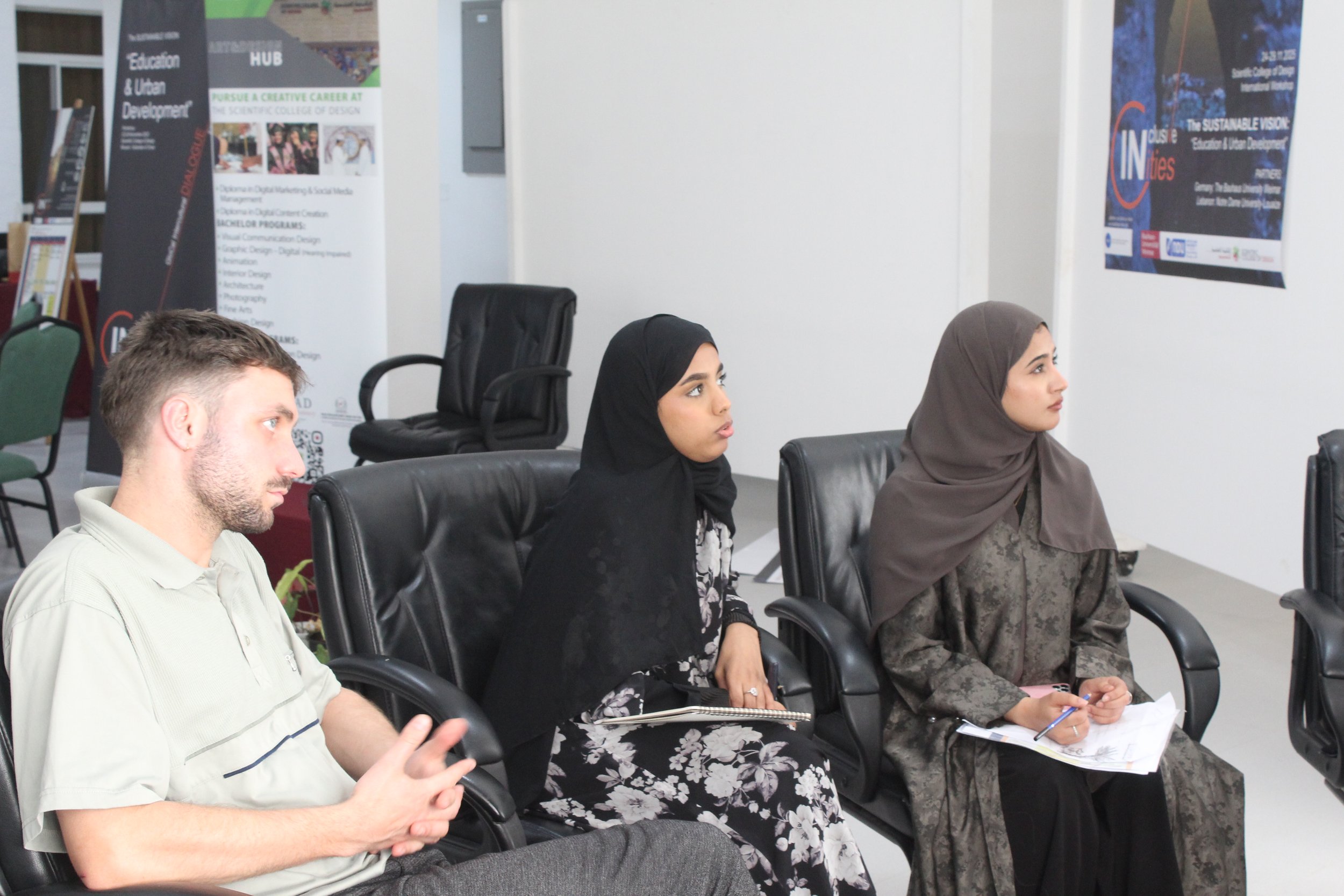
After three days of travel and introductory input from UNESCO professionals and non-governmental organizations on the sites, interdisciplinary teams of five to six students from Oman, Lebanon, and Germany collaborated on the development of concepts for the revitalization of the city of Al Hamra.
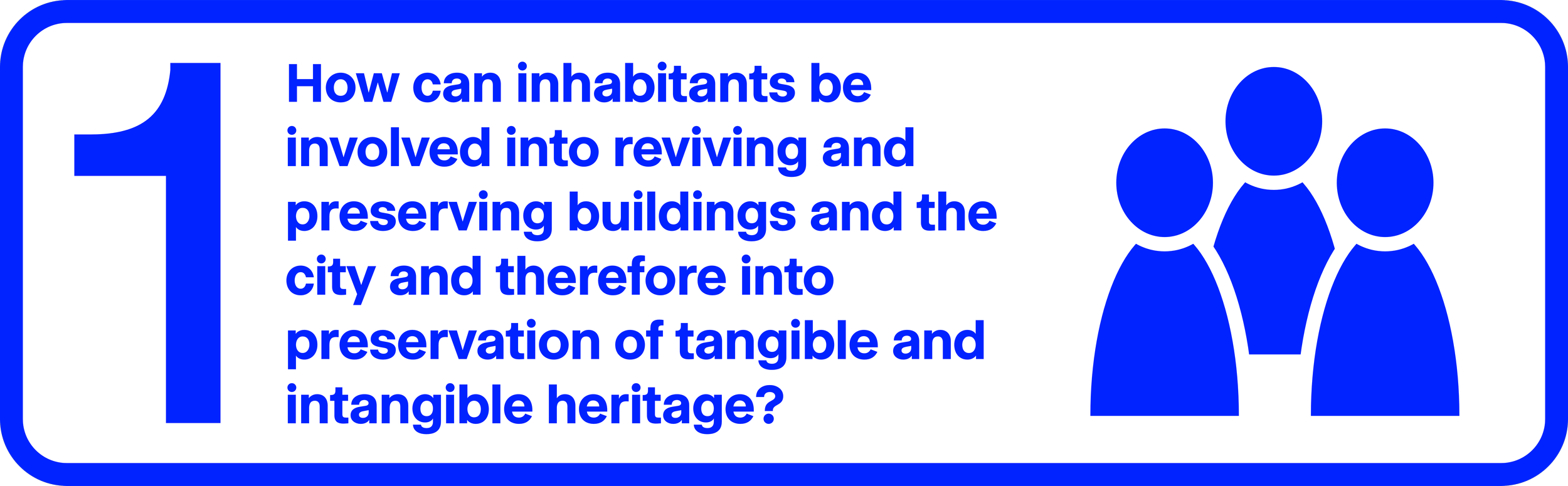
As the buildings remain the property of the individuals and families who once inhabited them, their active involvement in the revitalization process is essential to the project’s success.
Furthermore, the maintenance of buildings constructed from mud and earth requires continuous and labor-intensive care, which makes it even more important to include former inhabitants in both the preservation and future use of the site.
Final Suggestions
Problem
Questions
Stakeholders
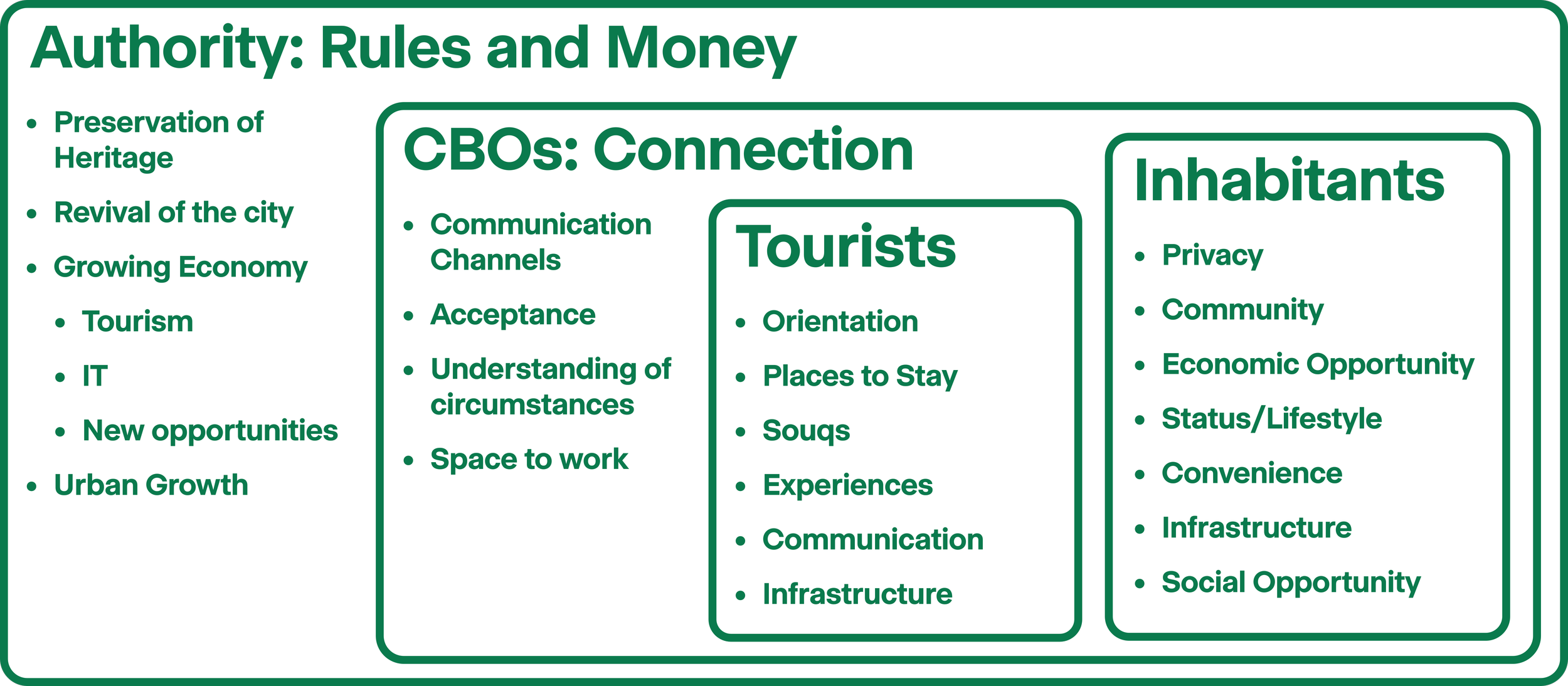
The title The Thin Line describes the difficulties of including state interests of the authoritarian Sultanate, the input and work of NGOs, and, most importantly, the interests of the inhabitants of Al Hamra.
Concept of a workshop to inform a participative design process in the future
The Thin Line:
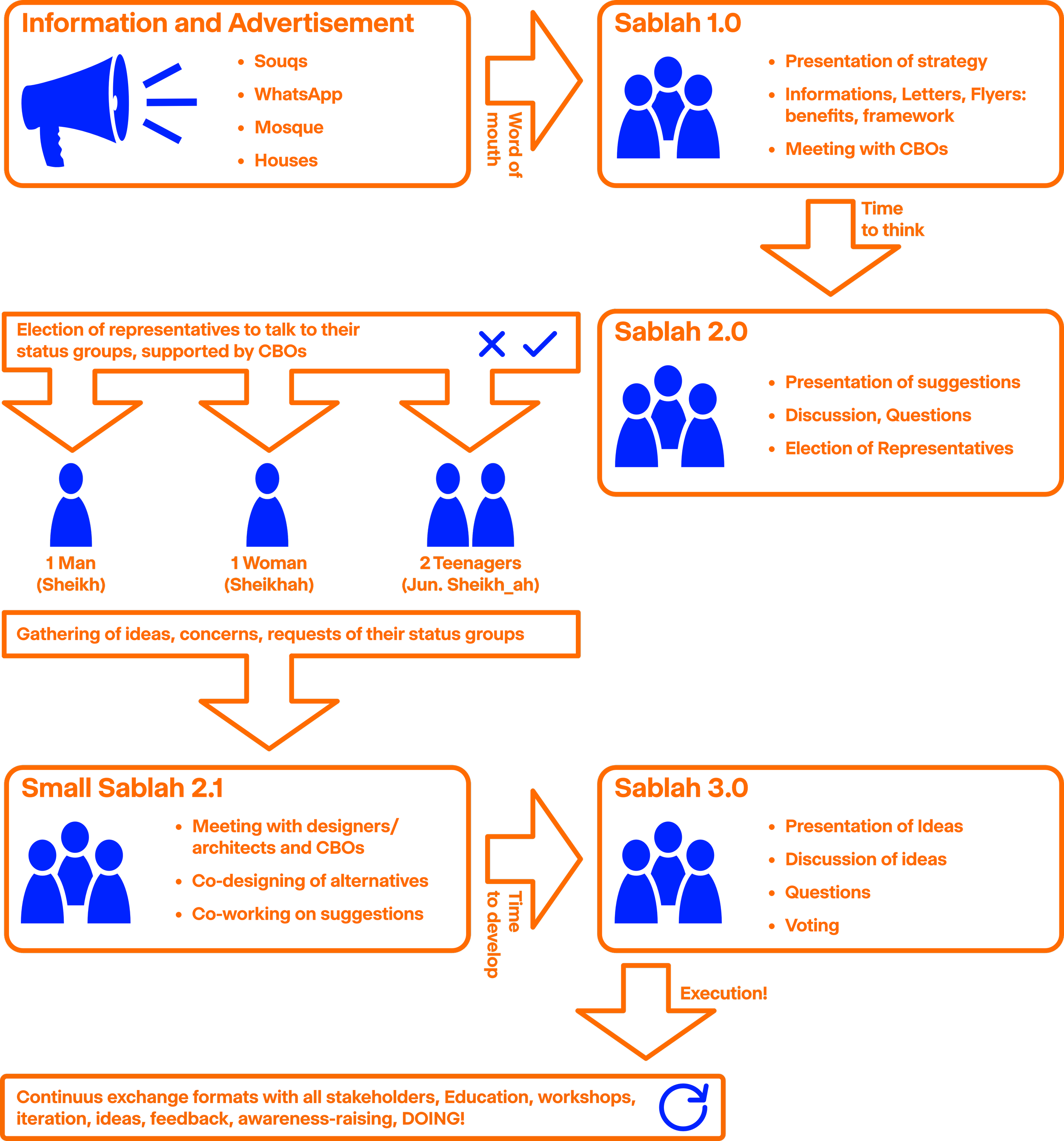
This analysis and proposal were created in collaboration with students from Lebanon, Oman and Germany, led by Leopold Slenczka:
Saja Al Arimi (SCD)
Shaima Al Ghafri (SCD)
Jean Georges Ibrahim (NDU)
Chantal Chiha (SCD)
Layali Al Azri (NDU)
Leon Wiesemann (BUW)
This proposal of a workshop concept can by no means be taken into work without further iteration, field studies, and intensive research in the future.
This is due to the limited time available in Oman and Muscat and due to difficulties in communication, collaboration and the difficulty of improving democratic participation in a society which is not used to democratic processes as they are implemented in other contexts.
Conclusion
The time spent in Oman was very valuable to me, as it highlighted several challenges, especially in intercultural communication and collaboration, and in the significant differences between educational systems.
One of the most shocking observations to me was the ubiquitous presence of patriarchal structures and the effects of an authoritarian political system on society. It was very noticable how social dynamics and institutional practices are influenced and shaped by those. Consequently, understandings of inclusion and democratic processes differ considerably from those familiar in other contexts.
To me, this exchange once again showed the importance of fighting for democracy and the imperative to work for the improvement of living conditions, for equality and participation anywhere in the world.
Thank you to all the people that worked on this project, good luck and great success in the future!